CASE: Can You Say "Anti-Inflammatory" in Amazon Pet Food Listings?
A red-yellow-green risk verdict for the phrase sellers keep using
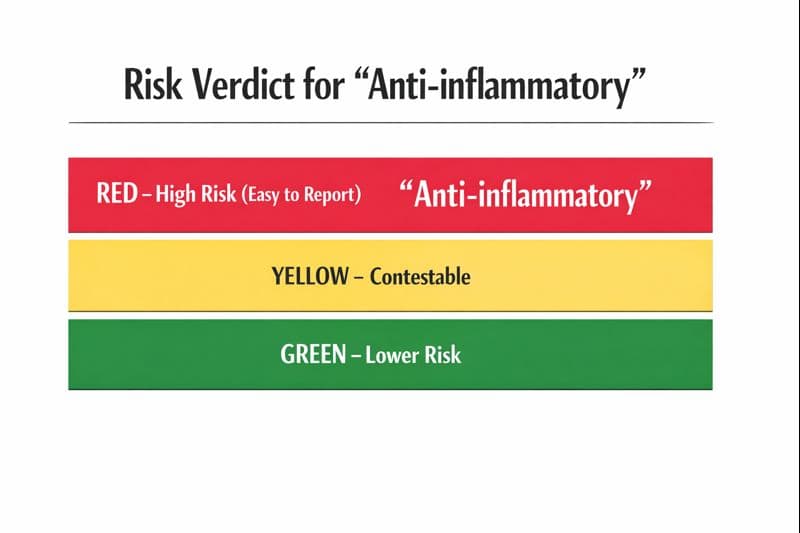
A Practical Risk Verdict (Red–Yellow–Green)
If you’re writing a pet food listing on Amazon, you’ve probably wondered:
“Can I say anti-inflammatory?”
It sounds harmless.
It describes a benefit customers understand.
And you’ll see it everywhere on competitor listings.
But here’s the short answer:
Yes, you can say it — but it’s one of the easiest phrases to get your listing reported or removed.
This article explains why “anti-inflammatory” is high risk, how Amazon actually reacts to it, and what safer alternatives look like.
Why “Anti-Inflammatory” Is a Problem on Amazon
The issue isn’t whether inflammation is real.
The issue is how Amazon classifies language.
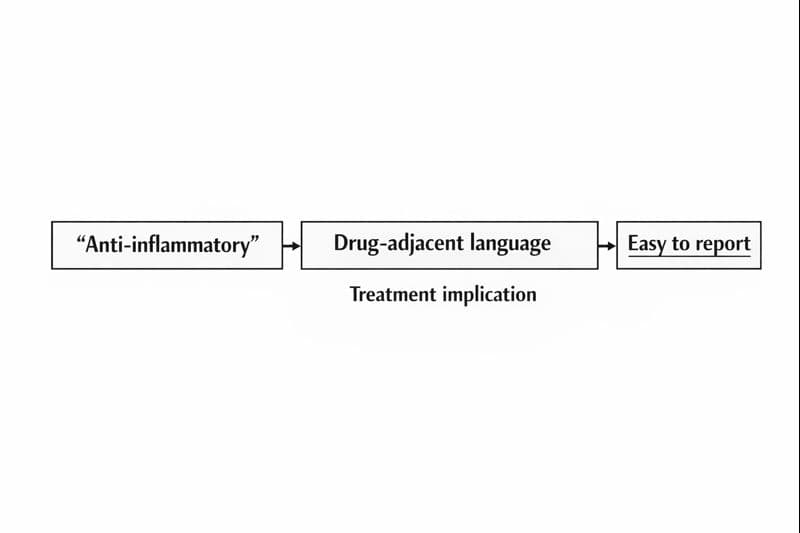
“Anti-inflammatory” is not treated as nutrition language.
It’s treated as drug-adjacent terminology.
In enforcement systems and competitor complaints, this phrase often implies:
- Treatment
- Symptom reduction
- Medical action
That’s enough to trigger review — even if your product is just food.
Amazon Doesn’t Judge Intent — It Flags Signals
Amazon doesn’t ask:
“Did the seller mean this medically?”
It asks:
“Does this wording look like a drug claim?”
That’s why:
- Educational context doesn’t protect you
- Footnotes don’t help
- “For informational purposes only” disclaimers are ignored
Once flagged, the listing goes offline first.
Clarification comes later.
The Risk Verdict: Red / Yellow / Green
Below is a practical, real-world risk model for claims related to inflammation.
These phrases are easy to report and frequently cited in complaints.
- Anti-inflammatory
- Reduces inflammation
- Pain relief
- Treats swelling
Why they’re dangerous:
They describe active medical effects, not nutritional support.
Even if the ingredient is natural, the wording implies drug-like behavior.
These phrases are softer but still risky depending on context.
- Soothing
- Comforting
- Helps with stiffness
- Supports mobility
Why they’re risky:
In isolation, they may pass.
Paired with disease terms, images, or testimonials, they often don’t.
These are the phrases competitors love to screenshot with context.
These phrases focus on structure-function support, not treatment.
- Supports joint health
- Supports normal inflammatory response
- Helps maintain mobility
- Supports overall wellness
Why they’re safer:
They describe support, not outcomes.
They align with how Amazon expects pet food benefits to be framed.
Safer doesn’t mean “immune” — but it’s much harder to attack.
Why Competitor Listings Don’t Prove Safety
You may be thinking:
“But top listings use anti-inflammatory and they’re still live.”
Three reasons why that logic fails:
- Enforcement is uneven, not fair
- Legacy listings are often reviewed under older standards
- Reports are selective, not universal
Visibility doesn’t equal safety.
It just means they haven’t been targeted yet.
The Real Question Sellers Should Ask
Don’t ask:
“Is this technically allowed?”
Ask:
“Is this wording easy for someone else to report?”
If the answer is yes, the risk isn’t theoretical.
It’s practical.
How ClaimVerdict Handles This
ClaimVerdict flags:
- Drug-adjacent language
- High-risk health claims
- Words that commonly trigger moderation or complaints
It also suggests safer phrasing directions, so you don’t lose all benefits — just the dangerous wording.
This is exactly the type of phrase ClaimVerdict scans for before your listing goes live.
Check your listing for takedown risks now.
[Try ClaimVerdict →]
System Command
Initiate audit on your listing
Run the Pet Food Listing Takedown Risk Scanner on draft copy before publishing.